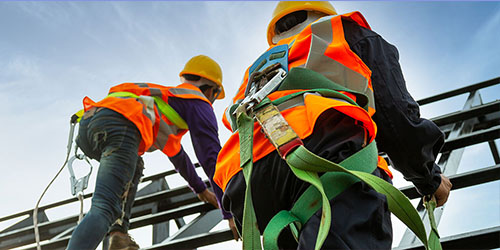


Health and safety at work is vital to ensuring the positive wellbeing of employees, and should always be led by employers.
In this course, you'll find out about health and safety legislation to be aware of at work, who’s responsible for maintaining safe working practices, and ways to take care of yourself and others while in the workspace.


To learn more about our courses, or to request a tailored quote for your organisation, please contact us today and a member of our team will be happy to help.
Many business owners assume that health and safety rests entirely on their shoulders, but the law deliberately spreads the duties between employer and employee. Under the Health and Safety at Work Act 1974, you must ensure, so far as is reasonably practicable, the health, safety, and welfare of your workforce. At the same time, employees must take reasonable care of themselves and others, follow safe systems of work, and cooperate with you on safety matters. Understanding this shared model is the foundation of effective risk management, because it shifts safety from a top-down enforcement exercise into a culture where everyone has a stake.
If you employ five or more people, you must record significant findings from your risk assessments, but the principle applies to every business regardless of size. A suitable and sufficient risk assessment identifies what could cause harm, who might be affected, and what control measures are needed to manage those risks. The most effective assessments focus on significant risks rather than every conceivable hazard, and they involve the employees who actually do the work, because they understand the realities that paperwork alone never captures.
The law requires you to appoint one or more competent persons to assist with health and safety. Competence comes from a combination of training, knowledge, and experience appropriate to the risks in your business. For many SMEs, this means developing internal capability through proper training, sometimes supported by external specialists for more complex issues. Whatever combination you choose, the competent person plays a central role in conducting risk assessments, developing safe systems of work, providing training, and advising on regulatory compliance.
Providing employees with clear information about workplace risks and proper training before they undertake new tasks is not a nice-to-have, it is a legal requirement. This includes induction training for new starters, job-specific training for tasks involving significant risks, and refresher training when activities change or new equipment is introduced. Effective training is matched to the risks employees face and to their level of responsibility, and competence should be assessed rather than assumed. Without this foundation, even the best-designed safety systems will struggle to work in practice.
Visible commitment from leadership sets the tone for the entire organisation. When managers allocate proper resources, address safety issues promptly, and consistently promote safe working practices, employees follow suit. Equally important is creating an environment where reporting hazards, near-misses, and concerns happens without fear of blame. Encouraging near-miss reporting in particular gives you the chance to prevent injuries before they happen, turning every minor incident into a learning opportunity rather than a missed warning.
Learn more about workplace health and safety roles and responsibilities by reading our blog article Workplace Safety: Understanding Roles, Risks and Responsibilities.


.jpg)