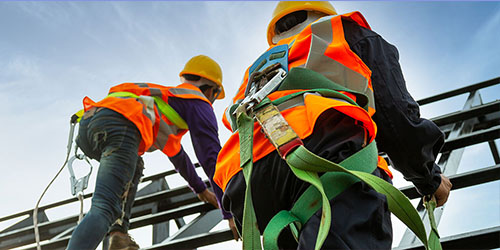
This course covers risk reduction strategies for working at height, emphasizing avoidance, prevention, and minimization. It defines working at height and explores ways to keep such work to a minimum.
The course discusses safeguards to prevent falls and minimize risks, including the safe setup of ladders and step ladders.
It provides guidance on ascending ladders, considering individual capabilities, load, environment, and weather factors.


To learn more about our courses, or to request a tailored quote for your organisation, please contact us today and a member of our team will be happy to help.
Many business owners assume that working at height is only an issue for construction firms or specialist trades. In reality, the Work at Height Regulations 2005 apply whenever someone could fall and injure themselves, whether they're changing a light bulb, accessing high storage in a warehouse, cleaning windows, or stepping onto a chair to reach a top shelf. Even low-level work counts if there's a real risk of injury from falling. Recognising this scope is the starting point for proper risk management.
The regulations require you to follow a specific order when managing height-related risks. First, avoid working at height where possible. Second, if avoidance isn't practical, prevent falls through proper working platforms with guardrails, edge protection, or safety nets. Third, where neither avoidance nor prevention is achievable, minimise the distance and consequences of any fall. Personal fall protection equipment sits at the bottom of this hierarchy, not the top, and should never be your first line of defence.
Ladders should only be used for light, short-duration work where more suitable equipment isn't justified. Even then, they need to be long enough, secured against movement, set at the correct angle, and resting on firm, level ground. Workers should maintain three points of contact when climbing and never overreach. For many tasks, a podium step, mobile platform, or scaffold tower is significantly safer and more efficient. Question whether the ladder is genuinely the best tool, rather than defaulting to it out of habit.
All equipment used for working at height must be suitable for the task, regularly inspected, properly maintained, and used only by competent people. Pre-use checks identify damage or defects before they cause harm, and more detailed periodic inspections at appropriate intervals catch deterioration that day-to-day use might miss. Establish clear procedures for reporting defects, withdraw faulty equipment from service immediately, and never attempt makeshift repairs that compromise safety.
Rescue planning is one of the most overlooked aspects of height safety. If a worker falls and ends up suspended in a harness, every minute counts, and waiting for emergency services to figure out access on the day is not a plan. Develop rescue procedures before work starts, ensure first aid provision is adequate for the activity, and consider how quickly help can realistically reach the location. Building this thinking into your planning, rather than leaving it to chance, is what separates compliant businesses from genuinely safe ones.
Learn more about working at height safety and preventing falls in the workplace by reading our blog article Working at Height Safety: Preventing Falls in the Workplace.


.jpg)